
Solid wood or WPC in forestry: Which is the smarter investment choice today?
The Russian forest industry: a comprehensive investment dynamics analysis.
Overview of the Russian forest industry.
The Russian forest industry has been confronted with significant trials in recent years. Investments in the forest complex from January to September 2023 amounted to 127.7 billion rubles, a decrease of 11.3% compared to the same period in the previous year, as reported by Roslesinforg. This data underscores the pressing challenges and the need for adaptation in the industry under current economic conditions.
Impact of sanctions on wood exports.
A key factor in the reduced investment is international sanctions. The export of timber products abroad in the final two months of 2023 fell by 23% compared to the previous year. Investment advisor Yulia Kuznetsova projects a further 7% annual decrease in overall export volumes. This decline in exports significantly diminishes the sector's investment appeal.
Key factors in investment decline.
Industry experts point to several crucial factors that are influencing the downturn in investments:

- Central bank's interest rate hike: An increase in the interest rates by the Central Bank of Russia has escalated the cost of borrowing, hampering the initiation of new projects within the industry.
- Export reduction of timber: The decrease in timber exports, particularly to countries now hostile to Russia, has significantly impacted the industry. Despite China increasing its import volumes, it hasn't completely compensated for the loss of cooperation with Western nations.
- Logistics challenges: From 2022, logistical issues have surfaced due to the reorientation of trade flows. The transportation of wood from the European part of Russia to China has become economically more beneficial than from Siberian routes, leading to unforeseen competition among Russian suppliers.
- Certification issues. As of April 2022, a prohibition on the use of Russian wood in FSC (Forest Stewardship Council) certified products was enacted. This has severely impacted the industry's access to the global market, as FSC certification is a major indicator of environmentally responsible and sustainable forest resource management.
Prospects and government support.
The development of container transportation through alternative logistical solutions is seen as a vital area for government support. The Ministry of Industry and Trade of the Russian Federation is keen on collaboration with Kazakhstani transport and logistics companies to facilitate Russian goods' transportation to European markets.
Investment attractiveness: solid wood products vs. deep wood processing
Investing in the forest industry requires consideration of several key factors that might make it less appealing compared to other market options with quicker returns. Let's focus on these overall trends and fundamental aspects that influence the attractiveness of investments in this sector.
Long payback period: The forest industry typically features lengthy return on investment periods, with some wood processing plants taking up to 50 years to become profitable.
High capital intensity: Significant upfront investments in equipment and infrastructure mean a higher financial risk, particularly in uncertain and volatile markets.
Market volatility: Global changes such as economic crises and shifts in trade policies add to the unpredictability of demand and prices in the forest product market.
Ecological and regulatory constraints: Stringent environmental regulations can increase operational costs and reduce profitability in the forest industry.
Alternative investment opportunities: The current market offers a variety of alternative investment options that promise shorter payback periods and potentially higher returns.
The Russian forest industry is navigating through a period of significant challenges, including decreased exports and investments, logistical difficulties, and the necessity for government support. As the sector embarks on a journey of reorientation and adaptation to new market realities, its traditional investment models are being tested against more dynamic and flexible strategies.
Solid Wood or WPC: Which is more attractive for investors today?
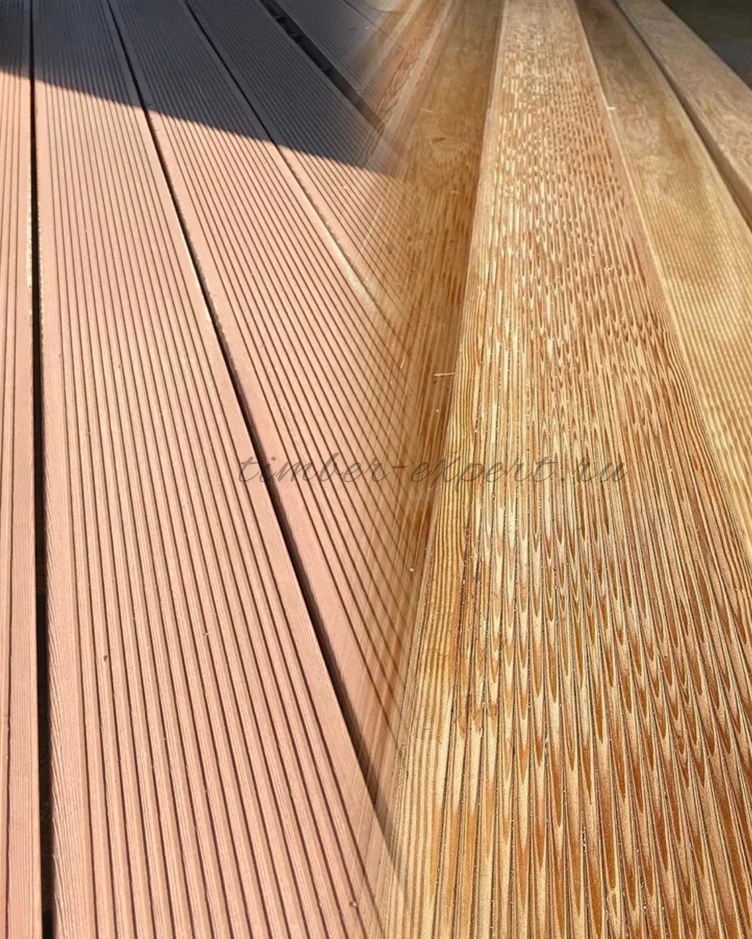
In the world of timber investment, one question often arises: which is more lucrative for today's investor - products made from solid wood, specifically larch, or Wood Polymer Composite (WPC)? To understand this, let's delve into an analysis comparing terrace boards made from larch and WPC, particularly in terms of the added value of the final product.
Raw material considerations.
For larch wood products, high-quality timber is essential. However, it's important to note that only about 5-15% of total timber harvests, depending on the region, are of this quality. The majority consists of less desirable types like dry wood, thinning, beetle-damaged wood, unsuitable for high-class products like larch terrace boards. In contrast, WPC production utilizes these lower-grade wood by-products, making its raw material significantly cheaper and more accessible.
This key difference in raw materials not only affects the cost of production but also determines the final market price and investment attractiveness.
Efficiency and waste management.
A major advantage of WPC is waste minimization. WPC production, incorporating wood dust (often from recycled waste) and polymers, virtually eliminates waste. On the other hand, larch wood production faces waste issues due to wood grading and defects like cracks and knots, leading to additional costs for disposal or recycling.
Standardization and storage.
WPC offers a high level of product standardization. Unlike natural wood, each batch of which has unique characteristics and requires individual storage and sorting approaches, WPC is produced with standardized parameters, simplifying logistics and reducing storage-related risks.
Resistance to external factors.
WPC is more resistant to factors like moisture, fungi, and insects, reducing the risk of losses from damaged goods. This is particularly important for long-term storage or transportation.
Marketing and PR strategies.
WPC manufacturers often invest significantly in marketing and PR, effectively creating demand and an image of an innovative and eco-friendly product. In contrast, natural wood producers are often limited in advertising budgets, impacting their market competitiveness.
WPC production demonstrates several advantages in terms of added value: waste minimization, product standardization, resistance to external factors, and effective marketing strategies. These factors contribute to faster ROI and increased profitability compared to traditional larch wood terrace boards.
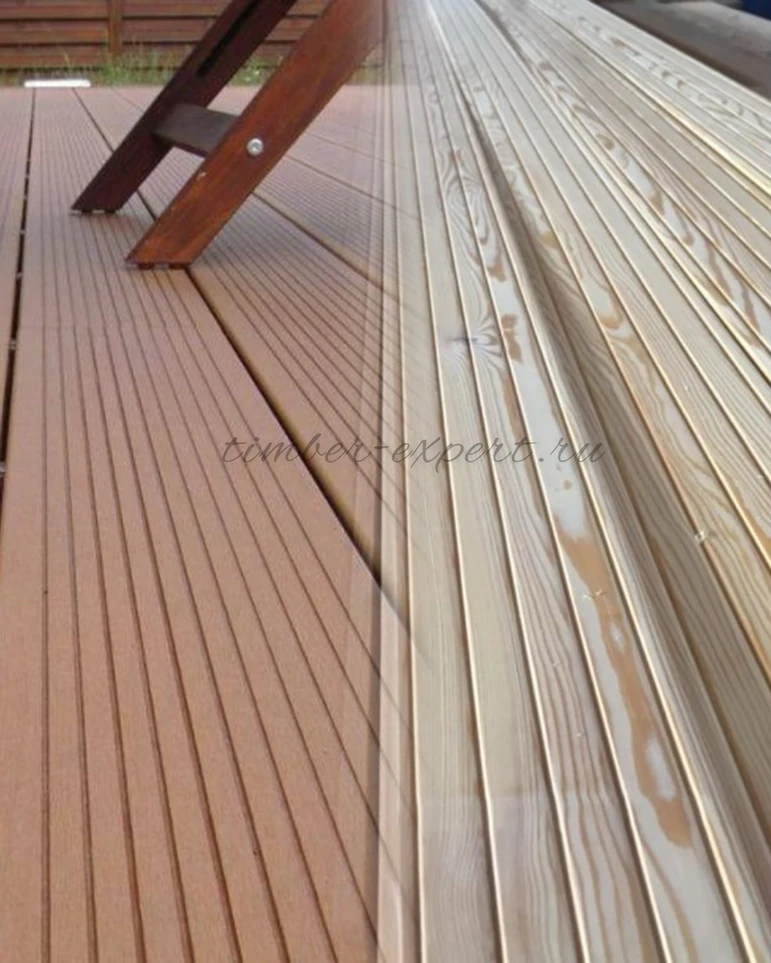
However, there are aspects where WPC can'not match natural larch wood:
- Aesthetics and natural appeal. Larch has a natural beauty and unique texture hard to replicate in composite materials. Its warmth and classic aesthetics are especially valued in design and architecture.
- Natural durability. Larch's natural strength and rot resistance make it an optimal material for exterior structures, particularly under intensive use. For instance, many famous ski resorts prefer larch for surfaces due to its ability to withstand heavy use.
- Thermal conductivity and ccmfort. Natural wood, including larch, has better thermal conductivity than WPC, making wooden terraces cooler and more comfortable in hot weather.
- Environmental sustainability. While WPC is often made from recycled materials, larch is a completely natural, renewable resource, potentially more desirable from an ecological sustainability standpoint.
Postscript from Timber Expert: the elite's choice - why solid wood always tops preferences?
In conclusion, while WPC has certain production and economic advantages, larch wood decking surpasses it in aesthetics, natural strength, comfort, and ecological sustainability. These factors make larch a more preferred choice for certain consumer categories and projects where these characteristics are crucial.
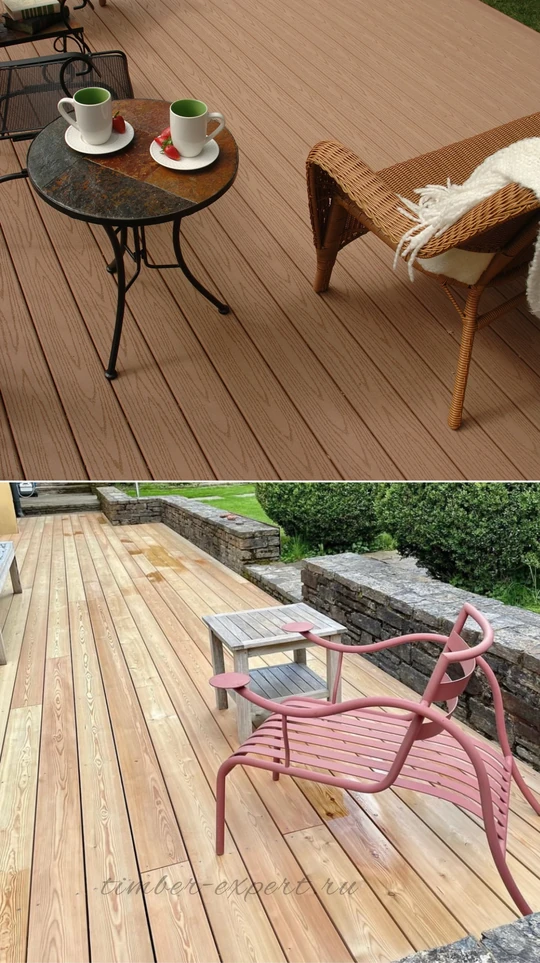
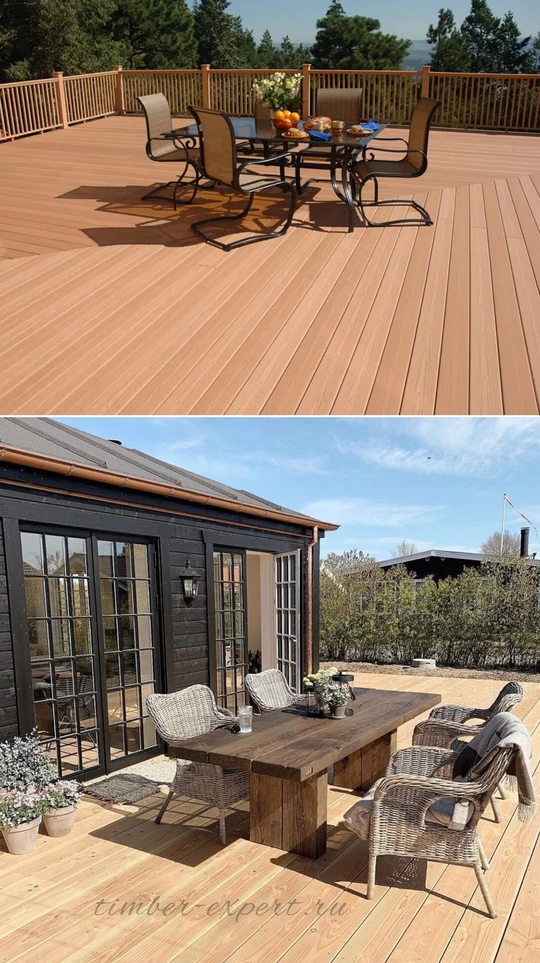
Remember, the most exquisite and expensive types of housing, from luxury mansions to exclusive seaside villas or premium apartments, always opt for natural materials. In the most expensive homes and communities, facades are made of natural wood, and terraces are adorned with natural timber. The interior finishes in prestigious apartments and flats feature solid wood parquet, underscoring the status and refined taste of the owners.
Villas in luxurious resort locations like Dubai, Thailand, or the Maldives stand out with terraces made from exotic wood species, showcasing the uniqueness and luxury of natural materials. Also, at prestigious ski resorts from Courchevel to St. Moritz and Mont Blanc, natural wood, including larch, is used everywhere, symbolizing superiority, quality, and impeccable taste. In the world of high-class construction and luxury design, WPC simply doesn't stand a chance. Natural wood is not just a material; it represents elegance and sophistication, leaving an indelible impression of refinement and wealth.
Your premier supplier of high-ouality timber,
Timber Expert


