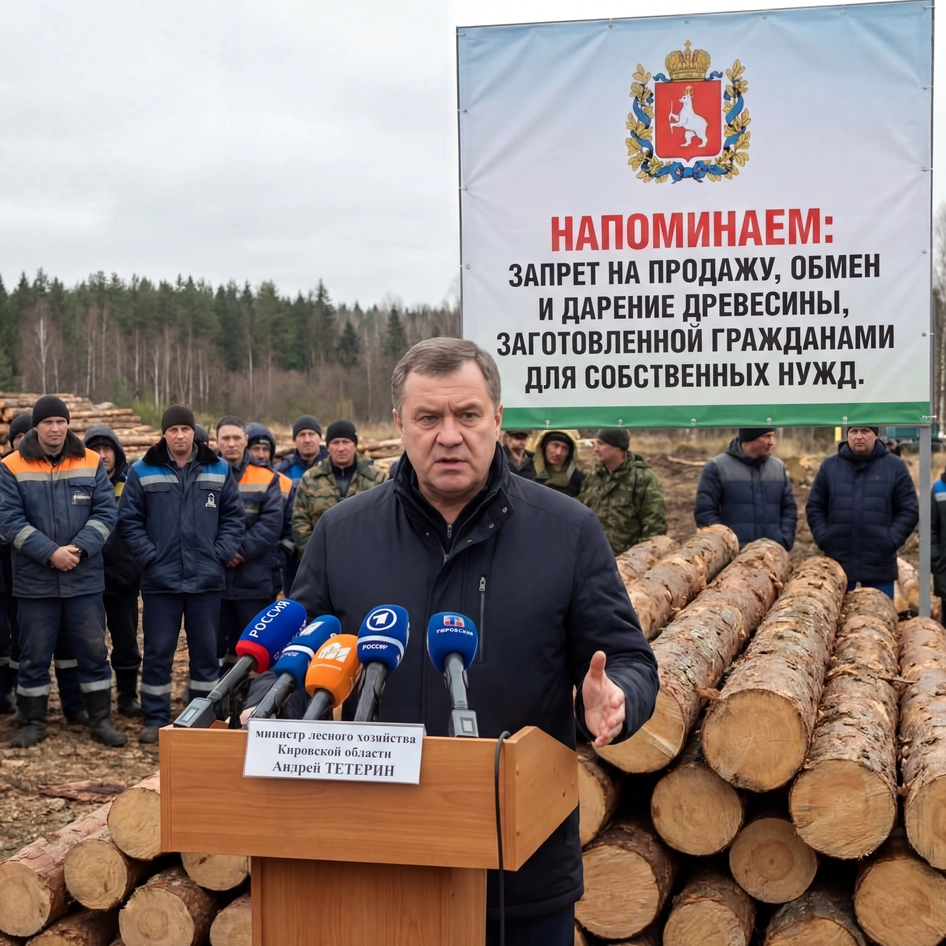
Darling, I Brought You a Birch Tree": Why Russians Can Get Free Timber But Can't Gift It (So What Americans Think of Free Wood)
"I'll Gift You a Forest, Darling": Why Russians Can Receive Free Timber But Can't Resell It
(So What the US, Europe & China Think About Free Trees)
There are three things you can watch forever: fire burning, water flowing, and a Russian citizen trying to make a quick buck on something the government gave him for free. In economics textbooks, this is called "arbitrage profit." In real life, it's called "maybe I'll get away with it." And in the Russian Forest Code, it's officially called "grounds for recovering a penalty nine times the value." Especially when this "almost free" thing is timber.
In the mind of your average Ivan, the magical thinking kicks in immediately: "So I cut down some logs, built a house. But these two extra cubic meters... maybe I'll sell them to my neighbor? As a favor? Or not exactly as a favor?" It's precisely at this moment—when the thirst for profit meets the long arm of the law—that our favorite regional news stories are born. The state suddenly remembers it's the owner, dusts off the calculator, and demands its money back. With interest. Nine times interest.
You see, in Russia, the state sometimes gives you trees—yes, entire trees—for heating or building a house. But here's the catch that would make an American libertarian choke on his coffee: you can't sell it, you can't gift it, and if you try, the math gets biblical. So before you book a flight to Siberia with an axe, let's compare: does the US Forest Service just hand out firewood? Can you chop a spruce in Germany for your fireplace? And what does China do with its forests? Grab a drink. This is going to be a ride.
So, Does Your Government Give You Free Timber?
Let me guess, dear reader from America, Europe, or China: you're sitting there thinking, "Wait, the Russian government just gives away trees? For free? What century is this?"
Yes and no. And this "yes but no" is the most Russian thing you'll hear today.
The Magic of Article 30
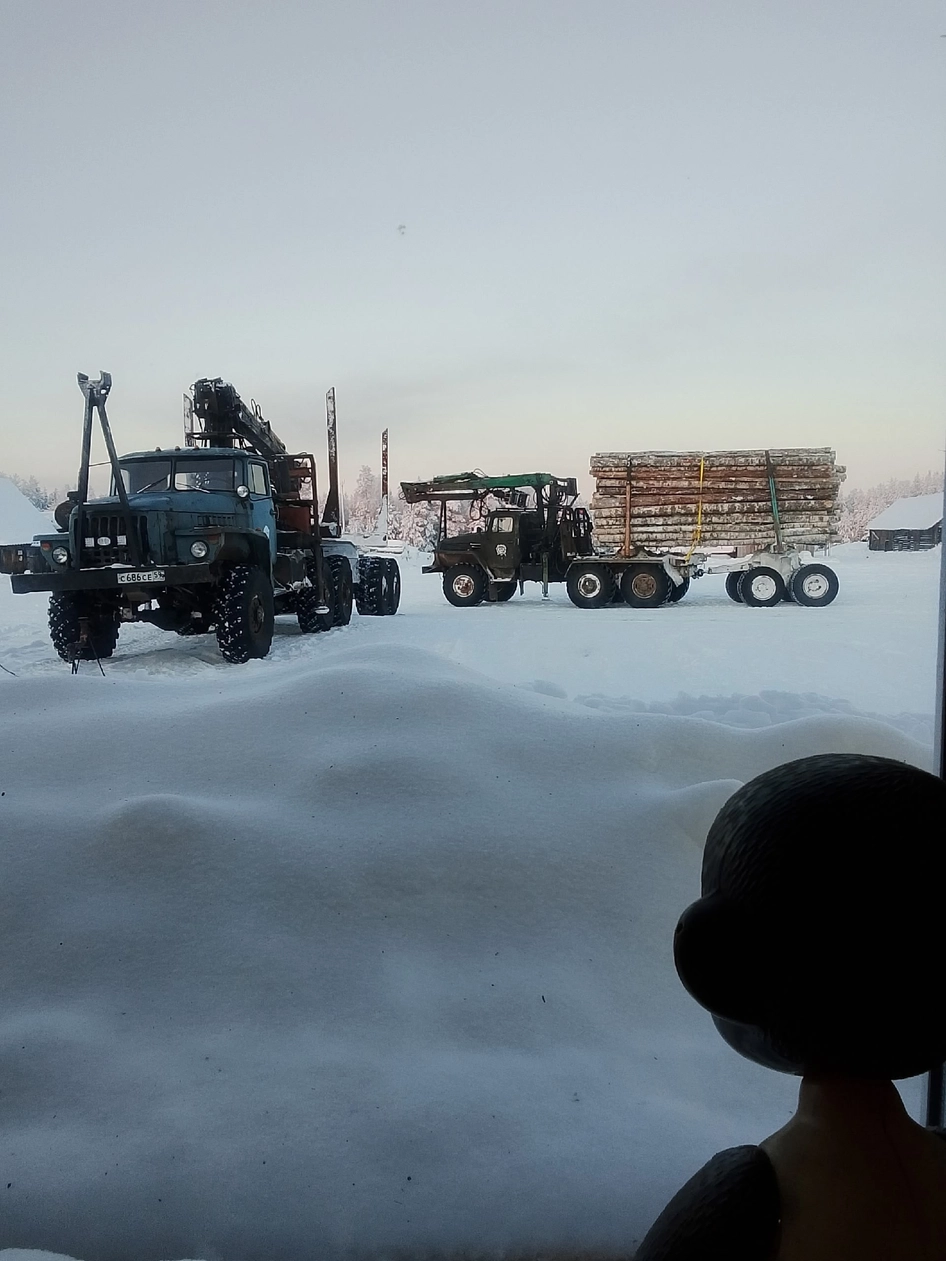
In Russia, there's this beautiful piece of legislation called Article 30 of the Forest Code . It says that citizens have the right to harvest timber for their own needs—heating, building a house, repairing a shed, or constructing a banya (because a Russian without a banya is like a fish without a bicycle).
But here's the catch: this timber comes with a leash.
The law explicitly states: "Timber harvested by citizens for their own needs cannot be alienated or transferred from one person to another in any other way" . In plain English: you can cut it, you can use it, but you CANNOT sell it, gift it, trade it for your neighbor's goat, or leave it to your nephew in your will.
Think of it as the forestry equivalent of food stamps in the US. You can buy groceries, but you can't sell them for cash. Except here, instead of groceries, we're talking about entire pine trees.
Who Gets This "Free" Timber?
The system works like this:
You, a humble Russian citizen, need wood. Maybe it's -40°C outside and your radiator died. Maybe you're finally building that dacha your wife has been nagging about since 2008.
You go to the local forestry authority and sign a purchase and sale contract for forest plantations . Yes, it's called a "purchase and sale" even though you're paying a symbolic price that would make a Western logger weep with laughter.
You pay a nominal fee—literally 10-20 times below market value. In the Perm region, for example, 100 cubic meters of wood might cost you around 15,000 rubles (about $170). That's less than an iPhone case in Manhattan.
You go into the forest, cut down your allocated trees, and haul them home.
You sign a blood oath (metaphorically) that you will use this wood ONLY for yourself.
The Indigenous Exception
There's also a special provision for indigenous small-numbered peoples of the North, Siberia, and the Far East. They can harvest timber completely free of charge in their traditional territories . Because if you've been living in the same forest for 5,000 years, hunting reindeer and worshipping spirits, the least the government can do is let you have some firewood.
What Happens If You Try to Sell It? (Spoiler: It Hurts)
Now, here's where it gets juicy for our international audience.
In most countries, if the government gives you something, it's yours. You can burn it, sell it, or turn it into modern art. Not in Russia, comrades.
The 9x Multiplier from Hell
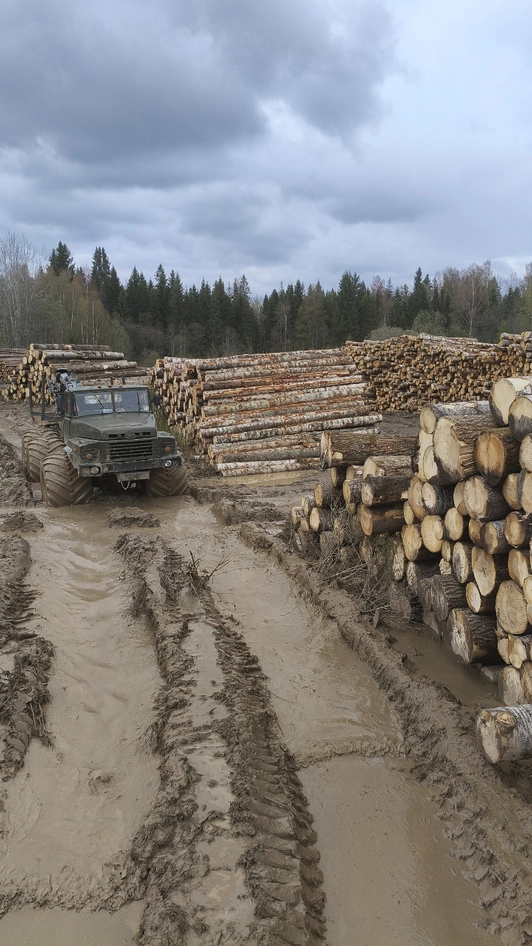
If you get caught selling your "personal needs" timber, the penalty is nine times the value of the wood [citation:original]. In some regions, like Krasnoyarsk, it's even higher—10 times [citation:original]. And if you're a large family in the Perm region? Hold onto your ushanka: it's 500 times the value [citation:original].
Let's do the math:
You pay: 15,000 rubles ($170) for 100 cubic meters
You try to sell it: market value ~150,000 rubles ($1,700)
You get caught: penalty = 135,000 - 150,000 rubles ($1,530 - $1,700)
Congratulations! You've just turned a small profit opportunity into a life-ruining debt. As we say in Russia: "The miser pays twice. The timber speculator pays nine times."
The "Scapegoat" Clause
Here's the really nasty part: if you "gift" the wood to your friend and HE sells it, YOU are still responsible [citation:original]. The contract is in your name. Your friend will be drinking tea warmly in his illegally heated house while you're explaining to the forestry inspector why your wood ended up three villages away.
Regional Highlights: A Tour of Russian Timber Absurdity
Perm Krai: Strict But Mathematically Precise
The Perm region has its act together. They banned alienation back in 2014 and calculated penalties with the precision of a soviet engineer. For large families, that 500x multiplier means you're not just poor—you're generational-debt poor [citation:original].
Krasnoyarsk Krai: Administrative Delight
In Minusinsk, the local forest inspector explains with visible pleasure that besides the 10x penalty, you'll also get a fine of 800-2,000 rubles as an individual [citation:original]. Then they deliver the psychological killing blow: "Your houses remain unrepaired, your plots stand empty." Picture it: an empty plot, not a single nail hammered, but a beautiful sense of moral satisfaction from your illegal timber sale. And a debt.
Bryansk Oblast: Bureaucratic Paradise
Bryansk went all-in on control. In 2021, they passed a law requiring citizens to return to the forestry authority within TWO YEARS and provide photo or video evidence of their completed house or banya [citation:original].
Imagine the scene: Ivan comes to the forest office with a selfie of himself in a new banya, holding a venik (bath broom). "See? I built it! The wood wasn't sold!" It's the triumph of digitalization: your banya selfie is now an official legal document.
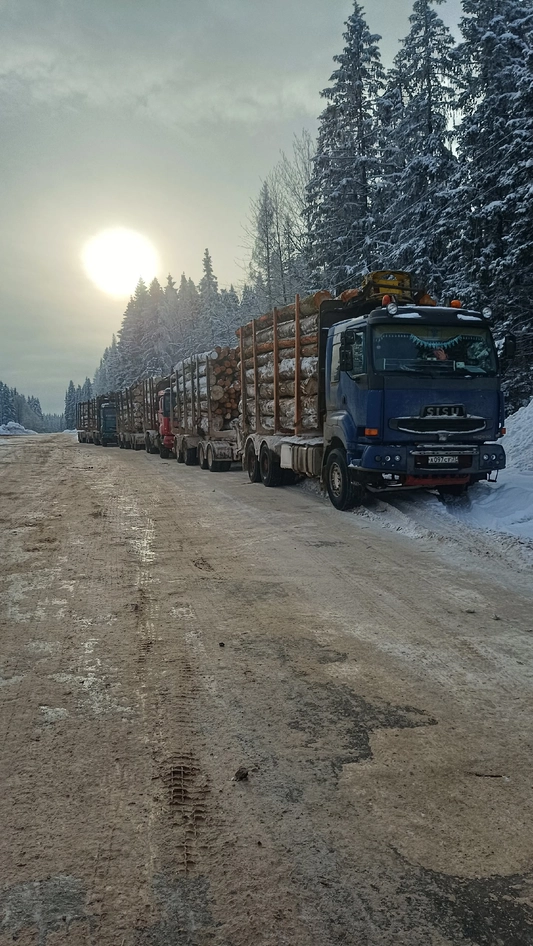
But Can You Gift It If You REALLY Want To? (The Existential Question)
Ah, the million-ruble question. Your mother-in-law appears. She's cold. She wants to build a rabbit hutch. You have extra logs. She's family. Surely...
NO.
In the eyes of the law, a gift is still a transfer. The Forest Code doesn't care about your family drama. The only legal way to gift the wood is to officially make your mother-in-law a member of your household—register her in the house you're building with that timber, and then technically the wood is being used for heating a residence where she lives.
So yes, you can gift the wood. You just have to also gift her a room, a notary visit, and a lifetime commitment.
What About Other Countries? Do They Give Away Trees?
This is the part where our international readers lean in. Does your government give you free wood?
United States: "Free? You Must Be Dreaming"
In America, the Forest Service manages 193 million acres of national forests and grasslands. Can you just go cut down a tree for your house?
Technically, yes. Practically, no.
Personal Use Permits: You can buy a "Christmas tree permit" for $5-10. That's for ONE small tree. For a house? You're looking at commercial timber sales.
Firewood Permits: Many national forests allow you to collect firewood for personal use with a permit. Cost: around $20 per cord.
Free Use: Under certain conditions, the public can remove timber for "personal use" (fence posts, firewood) without payment, but this is strictly regulated and usually limited to dead/down material .
But here's the difference: once you have that wood in America, it's yours. You can sell it. You can gift it. You can turn it into a sculpture and sell it at an art fair. The government doesn't track your logs like they're nuclear materials.
Europe: "Free Wood? This Is the EU"
Europe is a patchwork, but generally:
- Germany: Forest ownership is sacred. Most forests are private or state-owned. You don't just walk in and cut. You buy from the forest office at market rates.
- Scandinavia (Finland/Sweden): "Everyman's right" (allemansrätten/jokamiehenoikeus) allows you to hike, camp, and pick berries, but cutting trees? Absolutely not. That's theft.
- France/Italy: Strict regulations. Permits exist for firewood collection, but it's not "free"—you pay, and you certainly can't build a house with it.
The concept of "subsidized timber for personal construction" is almost uniquely post-Soviet. It's a relic from the era when the state felt responsible for keeping its citizens from freezing to death.
China: "The State Provides... Carefully"
In China, all forest land is state-owned or collective-owned. The government has massive afforestation programs (hello, Great Green Wall). For personal needs:
- Rural residents in some areas can apply for timber for house construction.
- There are quotas, strict approvals, and it's generally not "free" but subsidized.
- And like Russia, the wood is for personal use only—reselling is illegal.
But China's system is more controlled and less romantic. You don't get the same "Ivan with an axe" energy.
Why Does Russia Even Do This? (The Deep Meaning)
Let's take off our cynic's crown for a moment and put on our political economist glasses. Why does the state care so much about a few logs?
It's not about the wood. It's about the system.
In the 1990s, Russia experienced "wild capitalism." Everything was for sale. Forests were stripped bare by people who got timber at subsidized rates and sold it at market prices. The state watched its forest fund disappear while a few made fortunes.
The ban on reselling "personal needs" timber is a firewall. If every citizen could take cheap wood and flip it, the forest would be gone in a decade, and a few "timber barons" would own it all. The state subsidizes YOUR house, not a timber trader's Mercedes.
As Adam Smith might have said (if he'd been drinking vodka): "We expect our dinner not from the benevolence of the butcher, the brewer, or the baker, but from their regard to their own interest." In our case, the butcher (lumberjack) must eat his own dinner (build his house), not sell it to a restaurant.
The Verdict for International Adventurers
Dear readers from America, Europe, and China! If you ever find yourself in Russia with a sudden desire to build a log cabin:
You probably can't. This right is for Russian citizens, residents, and indigenous peoples. Foreigners generally need to buy timber commercially or through auctions.
If you somehow get "personal needs" timber, treat it like a kidney transplant. It's for YOUR body only. Don't sell it on the black market.
The penalties are real. In 2025, a case in Krasnoyarsk involved timber smuggling worth 3.8 million rubles. The defendants face up to 10 years in prison . In Irkutsk, a couple got 7 years for exporting 20,000 cubic meters illegally .
The system is watching. Not with drones necessarily, but with EGAIS (the Unified State Automated Information System) and satellite technology. Selling a log unnoticed is harder than hiding a giraffe in a refrigerator.
Final Thought: The Gift That Keeps on Giving (Fines)
So, can you gift timber in Russia? No.
Does the US government give away trees? Kind of, but you pay.
Does Europe offer free wood? Only in your dreams.
Is China's system similar? Yes, but with more paperwork.
As Clive James might have said: "Generosity is a wonderful thing, but before being generous with government property, make sure you have nine lives (or nine times its value) to spare."
The Russian Forest Code is a beautiful, absurd, deeply Soviet document that treats every citizen as both a potential beneficiary and a potential criminal. It gives you wood with one hand and holds a calculator in the other, ready to multiply your debt by nine.
And remember: if you're going to break the law, at least build that banya first. You'll need somewhere to sweat out your regrets when the inspector comes knocking.
Ministry of Forestry of the Kirov Oblast (and their colleagues across Russia) are watching. Not because they have nothing better to do, but because in Russia, the forest belongs to everyone—which means it belongs to no one, which means the state has to guard it like a dragon guards gold.
"Freedom of one person ends where another person's firewood begins."
— Folk saying, reinterpreted by the Forest Code