
Kazakhstan's transit blockade: a new challenge for Russia's plywood industry
"Like plywood over Baikonur": Unpacking the wood processing challenges on a galactic scale.
Foreword from the Author: In today's rapid-fire information age, events fleetingly capture our attention only to be swiftly replaced by the next. Before we have the chance to pause and ponder, another wave of news engulfs us. And so, as whispers grew louder about the Kazakhstan transit blockade, alongside grim predictions of insolvencies and halted operations, many braced for the worst. Yet, it's worth noting: this isn't the Russian timber industry's first dance with fate in recent memory. Last year posed its own set of challenges, with not every player withstanding the strain. Still, strides were made. And as many fixated on one headline, the next was already forming in the shadows... But that's a story for another time. Dive in, dissect, and always bear in mind - life is riddled with curveballs, and only time will truly reveal what's around the corner. Yours in timber, Timber Expert.
A glimpse into the transit blockade in Russia.
Amid the hustle and bustle of international relations and commerce, the sudden halt in the transit of Russian plywood and other woodworking products by Kazakhstan has become a focal point for many in the European market. This significant blockade, initiated in early September, raises questions about the future prospects of the Russian woodworking industry.
European investigation on Russian plywood.
The unfolding situation intertwines with the European Commission's probe into potential circumvention of anti-dumping duties by Russian plywood producers. In August, this investigation targeted Russian birch plywood, highlighting concerns regarding the evasion of anti-dumping duties and possible imports into the EU in breach of existing sanctions.
The underpinnings of the transit crisis.
Understanding the ramifications of this blockade requires a deeper dive into the intricacies of global wood processing markets and the geopolitical context surrounding them.
1. The global importance of Russian plywood.
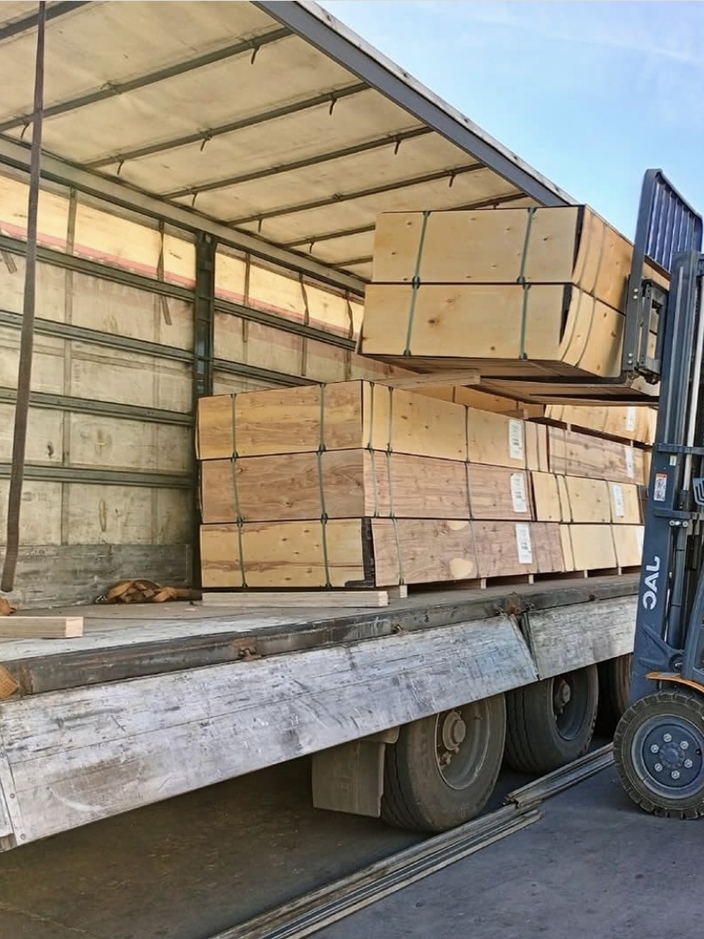
Russian plywood, particularly the birch variant, has a stellar reputation for its quality and durability. Russia has been a dominant player in supplying plywood to many European nations. This product's vast importance goes beyond construction. It's used in furniture, packaging, transportation, and many niche industries.
2. European market dynamics.
The European market's dependency on Russian plywood is notable. The sudden blockade and potential sanctions can create a supply vacuum, impacting industries relying on this essential product. Manufacturers, builders, and other stakeholders in the European Union might face a rise in costs, leading to a chain reaction in the price escalation of end products.
3. Kazakhstan's role in the equation.
As a significant transit hub for Russian woodworking products, Kazakhstan's sudden move to block these goods has broader implications. Given its geographical location and infrastructural advantages, Kazakhstan has been the preferred route for transporting Russian plywood to European destinations. This decision doesn't just affect Russia but also influences the economic landscape of Kazakhstan itself.
4. The circumvention suspicions.
The European Commission's focus on potential circumvention of anti-dumping duties adds another layer to the puzzle. Anti-dumping duties are meant to protect the domestic industries of importing countries. If Russian producers were sidestepping these duties, it would offer them an unfair price advantage over European producers, which might negatively affect the European plywood industry's health.
5. The bigger picture: geopolitical implications.
The blockade and investigation aren't isolated events. They fit into the larger narrative of geopolitics and trade relationships between the EU, Russia, and Central Asian countries like Kazakhstan. The mutual dependencies, economic stakes, and political considerations make the situation more complex than it appears at first glance.
Consequences and forward trajectories.
While it's too early to predict the long-term outcomes of this blockade and investigation, a few potential scenarios can unfold:
- Diversification of Supply Chains: European industries might start looking for alternative plywood sources, reducing dependency on Russian products.
- Negotiations and Resolutions: Diplomatic channels might be activated to address the concerns and ensure the smooth flow of goods, benefiting all parties involved.
- Innovation in Wood Processing: Challenges often lead to innovation. The woodworking industry might explore alternative materials or production techniques to counter potential supply shortages.
In conclusion, the Russian plywood transit crisis shines a light on the intricate dance of geopolitics, trade relations, and industry dynamics. As events unfold, stakeholders from all sides will be keenly observing, ready to adapt and pivot in this ever-evolving landscape.
European reactions and suspicions: delving deep into the plywood concerns.
Voices of concern: Lavijas Finieris and Woodstock Consortium.
Prominent European entities like Lavijas Finieris, in conjunction with the Woodstock Consortium, have publicly aired their apprehensions regarding the influx of Russian plywood into the European Union. These leading market players posit that the influx is facilitated through conduits like Turkey and Kazakhstan—a move that appears to be in violation of existing regulations. Our previous discussions illuminated how, in 2022, timber was channeled through Turkey, shedding light on the price disparities in our feature "
"The Wood War: Europe vs. Turkey - Unveiling Price Differences in Siberian Larch Amid Sanctions and Larch-y Discounts".
Anomalies in export data: connecting the dots.
Recent data offers a compelling narrative. A significant uptick has been observed in plywood exports to Europe originating from both Turkey and Kazakhstan. This rise in exports correlates with increased shipments from Russia to these intermediary nations. Given these concurrent trends, eyebrows are raised. The suspicion is palpable: could the plywood labeled as Turkish or Kazakh in origin actually trace its roots back to Russia?
Navigating the investigation: a roadmap.
The European Commission, recognizing the gravity of the situation, has allocated a nine-month window for an in-depth investigation, commencing on 23rd August. As outlined by Roman Kuzmin, a notable attorney from the Pen & Paper Bar Association, this period demands rigorous compliance from manufacturers. They are required to furnish comprehensive evidence to substantiate their claims and positions.
Furthermore, a meticulous record of plywood imports must be maintained. This ensures that, post-investigation, the European Commission is equipped with the necessary data to potentially levy anti-dumping duties on shipments, should they be deemed necessary.
Kazakhstan's stance and implications amid the plywood investigation.
A clear stance: Kazakhstan's Ministry of Trade and Integration speaks.
On 29th August, the Ministry of Trade and Integration of the Republic of Kazakhstan articulated its stance on the ongoing investigation by the European Commission. Standing tall as a responsible exporting entity, the Ministry echoed its commitment to collaborate proactively with the European Commission, ensuring transparency in the probe surrounding birch plywood exports.
A clarion call to producers: The Ministry's appeal.
Furthering its dedication to the investigation's integrity, the Ministry reached out to Kazakh producers and exporters of birch wood. The emphasis was on the dire necessity for these stakeholders to engage actively, ensuring all requisite information was furnished by the stipulated deadline of 28th September. The undercurrent was undeniable: non-cooperation could culminate in the heavy imposition of anti-dumping duties, peaking at a formidable 15.8% on their products.
Potential repercussions for producers and importers.
The unfolding investigation's results hold profound implications for producers and importers alike. Should the European Commission's probe validate concerns regarding the evasion of anti-dumping measures on Russian birch plywood, goods from Kazakhstan could be shackled by heightened duties.
However, a silver lining exists. Companies demonstrating unequivocal non-involvement in such circumvention activities may still cherish unhindered export privileges to the EU.
Affirmation from the Top: Kazakhstan's Presidential Statement.
Solidifying Kazakhstan's position in this complex web, President Kassym-Jomart Kemelevich Tokayev, on 28th September, during a pivotal interaction with the German Chancellor, accentuated his nation's unwavering allegiance to the sanctions policy against Russia. This declaration not only underscored Kazakhstan's integrity but also reaffirmed its indomitable stance on the global stage.
Customs barriers: Kazakhstan's unexpected hurdle for Russian plywood exporters.
Document roadblocks: a sudden snag in transit.
As the seasons shifted from the warmth of late summer to the crispness of early autumn, Russian exporters specializing in plywood and wood boards were caught off guard. These experts faced unexpected challenges when seeking documentation for the transit of their goods via Kazakhstan's rail system. Intriguingly, direct exports to Kazakhstan seemed to pass customs with ease, adding to the perplexity of the situation.

Market perplexity: Kazakhstan welcomes, but further transit stalls.
The market's pulse resonated with confusion. While goods could be seamlessly delivered to Kazakhstan, transporting them beyond its borders—whether to Kyrgyzstan, Uzbekistan, or Tajikistan—became a labyrinthine ordeal. Alexander Kotryumin, who helms the shipping department at Cherepovets Plywood and Furniture Mill, voiced the industry's collective sentiment, highlighting the nebulous nature of these obstructions. In his analysis, the impediments were not rooted in railway capacity constraints.
Northwest Russia's predicament: ac growing reliance on Kazakhstan.
For the expansive terrain of Northwest Russia, these hurdles sting sharply. Kazakhstan has evolved into an instrumental export ally for this Russian region. Delving into the numbers, Timur Irtuganov, leading the Russian Association of Furniture and Woodworking Industries, highlighted that Central Asian nations, with Kazakhstan at the forefront, account for a staggering 40% of Russia's board product exports. Yet, this once open corridor to Central Asia now seems shuttered.
Across the board impact: from titans to emerging players.
The ripple effects of this blockade reverberate across industry players, irrespective of their size. Take the case of the Sveza Group. Dmitry Leontiev, their director of planning and logistics, paints a telling picture: a whopping 69 wagons idly awaiting clearance, with another 40 stranded in Cherepovets. Such blockades translate into tangible business setbacks: unmet contract obligations and evaporating clientele.
Echoing the growing urgency, Alexander Kotryumin issued a stark warning. Should these complications with the Kazakh customs service persist beyond mid-November, the consequences could be dire, possibly halting production in Cherepovets. Similarly, Dmitry Leontiev aired apprehensions about potential operational pauses at one of Sveza Group's pivotal facilities.
Small businesses on the frontline: rising costs, falling margins, and a looming Crisis.
The predicament of small producers: a balancing act in crisis.
As the calendar pages turn towards the end of October, small producers find themselves treading precarious grounds. Alexander Gibezh, Development Director at Plate World Ltd, located in the heart of Yemva in the Komi Republic, outlines the mounting challenges. With the market price of finished products witnessing a decline, juxtaposed with surging costs—especially escalating energy expenses—profit margins are teetering on the brink. "Halting exports might very well be the death knell for our production," warns Gibezh.
The repercussions of investigations: more than just bad press.
Olga Kalyuzhnaya, helming the Russian Forest National Association of Timber Producers, underscores the ramifications of even being linked to investigations. Beyond mere reputational dents, the implications stretch to erode a business's economic standing, which could ripple outwards, affecting the industry's broader landscape. This sentiment is echoed with graver emphasis by Timur Irtuganov, who cautions, "Unless export challenges are swiftly addressed, the entire Russian woodworking sector might grind to a halt.
Navigating new market dynamics: opportunities amidst challenges.
In the intricate dance of global economics, Kazakhstan isn't merely stepping aside—it's setting the rhythm. The response of Russian exporters will be molded by both prevailing policies and their agility to pivot.
As Igor Turow, Chief of Economic Research at Spivak & Co, puts it, "In our contemporary world, no allies are perpetual, no adversaries everlasting. Only shifting interests persist."
The narrative emerging is one of adaptability. Many exporters are fervently seeking alternative avenues that circumvent Kazakhstan, albeit at a premium. Yet, these challenges could force diversification, which might reveal hidden silver linings. Sergei Soloviev, an economic strategist with Strategy-Rost LLC, offers a hopeful perspective. He states, "Every closed door is accompanied by an open window." Now, faced with Kazakhstan's shut doors, it's a pivotal moment for Russian exporters to discern emerging avenues of opportunity.
Sanctions games: dilemmas and countermeasures in the face of international pressure.
Navigating the sanctions maze: an era of intricate diplomacy.
Russian exporters are grappling with intensifying sanctions, prompting a quest for alternative paths, even if it means bending the rules. Countries like Turkey and select CIS nations are emerging as prospective allies in this intricate game, even though historically, they haven't been dominant forces in the plywood and pellet markets.
However, adopting such "innovative" export tactics risks drawing the ire of the European Commission. As Roman Kuzmin points out, the EC's actions won't merely hinge on concrete evidence. Instead, they'll be influenced by the prevailing political climate and the vested interests of the European market. This implies that the EC, even if seemingly indifferent to the situation, possesses the mandate to castigate and penalize the culprits publicly.
Penalties might encompass stringent monitoring, the levying of fresh duties or quotas, and potentially hefty fines for entities found skirting sanctions. The resultant reputational fallout could be staggering. Given this spectrum of possible repercussions, businesses are advised to gauge the risks comprehensively and embark on a quest for legally compliant adaptation strategies in this new economic milieu.
Stagnant exports: a glimpse into the numbers.
Recent statistics from AMDPD paint a grim picture for Russia's woodworking sector in the international arena. In the initial eight months of 2023, there's been a marked dip in product exports, especially when juxtaposed with figures from the corresponding timeframe in 2022.
Exports have plummeted by a significant 19.5%, revealing the hurdles confronting Russian wood industries in global trade. Especially troubling are the numbers related to wood fibreboard and plywood, with exports dwindling by 22% and 20%, respectively. The chipboard segment hasn't been spared either, witnessing a decline of 7.4% in foreign sales.
This numerical evidence underscores the dire state of the sector, underscoring the urgency to devise new strategies and explore untapped markets to recalibrate the financial equilibrium for these enterprises.
November: a month of anticipation and hope!
Central Asian nations, especially Kazakhstan, play a pivotal role for Russia's lumber sector, serving not just as significant export destinations but also crucial transit points. Yet, as of September's onset, Kazakhstan's transit avenues have been off-limits for Russian shipments, inclusive of wood products.
Sources from the Ministry of Industry and Trade suggest that this move was primarily to accommodate Kazakhstan's internal coal demands and to facilitate escalating grain exports. Mirroring the previous year's pattern, it's anticipated that Kazakhstan will resume its transit operations come early November. Given this, the ministry advises businesses to exhibit patience and await this timeline. In light of these circumstances, Russian Railways is engaging in active dialogue with its Kazakhstani counterparts. This matter has also garnered attention at the top echelons of intergovernmental discussions.
Strength in adversity: timber's resilient spirit.
Forest denizens are no strangers to challenges; they've weathered countless tempests. We're not mere woodworkers; we shape timber, bending it to our vision. Our resolve remains unyielding, for in our eyes, there are no unassailable barriers, merely fleeting hurdles. Stay tuned with us for the latest updates in the woodworking sector!
Yours in timber, Timber Expert.


