The $6B Irony: Putin’s Timber Pivot After EU Ban Hands China the Keys
SHOCK THERAPY: How the European Embargo Broke the Back of an Industry
The Eastern Pivot Didn't Just Happen—It Became Total
When Western officials announced another package of "crushing" sanctions in 2022, they favored the rhetoric of surgical precision. The blow, they claimed, was aimed at the regime, while the people and the global economy would suffer minimally. Three years later, Russia's timber industry—that modest, resin-and-sawdust-scented part of the economy—is conducting a brutal but instructive seminar on the law of unintended consequences.
By banning timber imports, Europe did not "stop the war." It simply handed China a new monopoly supplier and gave Russian governors a headache in the form of overloaded railways. The great geographical reorientation, of which the Kremlin had only dreamed, was executed not by a Far East development plan, but by a bureaucrat in Brussels with a stamp. The irony of history, as usual, is not without elegance.
The Great Game of Timber: Beijing Prints the Rules, Moscow Supplies the Raw Material
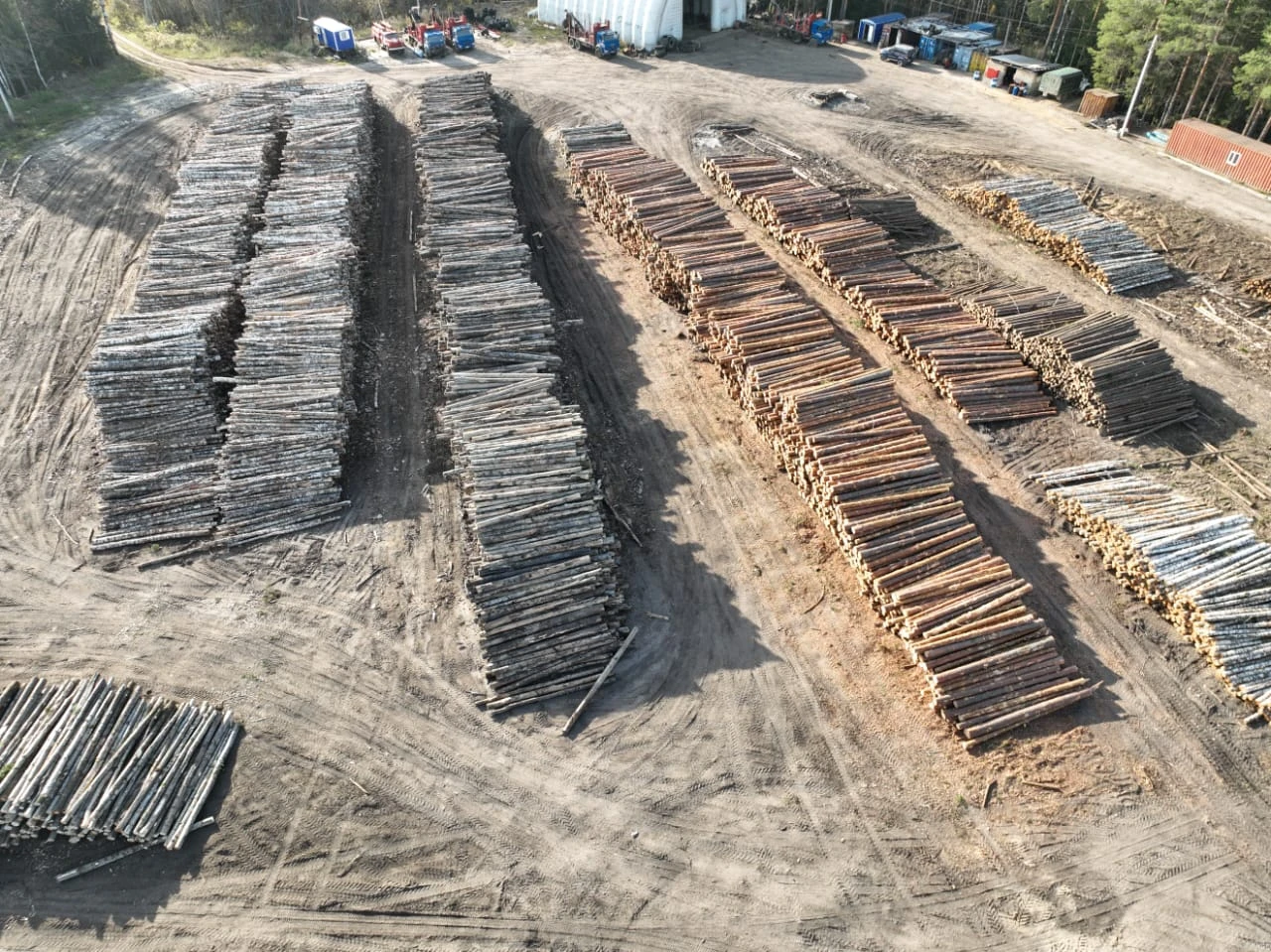
While diplomats in high offices discussed a "multipolar world," trucks laden with lumber were already building it. Since 2022, the map of Russian timber exports has been redrawn with the crude directness of a propaganda poster. Europe vanished. In its place arose Asia, which now takes 95% of processed wood.
But to call this a "pivot to the East" is to flatter Moscow's strategists. This is a capitulation on the buyer's terms. China, that insatiable dragon of industrialization, now absorbs 70% of all Russian softwood lumber imports. It is not just the main partner. It is the monopolist, dictating prices, logistical timelines, and, in essence, the fate of entire Siberian regions.
India emerges as the only strategic counterweight in this new reality. If China is the monopolist at the helm, then India is the shrewd and tough second-tier player, already called by experts the "main buyer" and the most promising market for value-added products. But its appetite is not a solution to the problem—it is its complication. India offers not liberation from dependence, but a transition from the diktat of one giant to the delicate, exhausting trade with another. This is not salvation, but an exchange of one cage for another, albeit with better odds.
Moscow, which loved to play on contradictions between European capitals, now finds itself in the role of supplicant before an Asian demand split between pragmatic Beijing and complex New Delhi. A great power has turned into a trader with one key commodity position, yet forced to bargain on two fronts. Depressing? Perhaps. But extremely profitable for those who managed to stay in the saddle.
Logistical Hell, or Why Russian Trains Can't Go East Any Faster
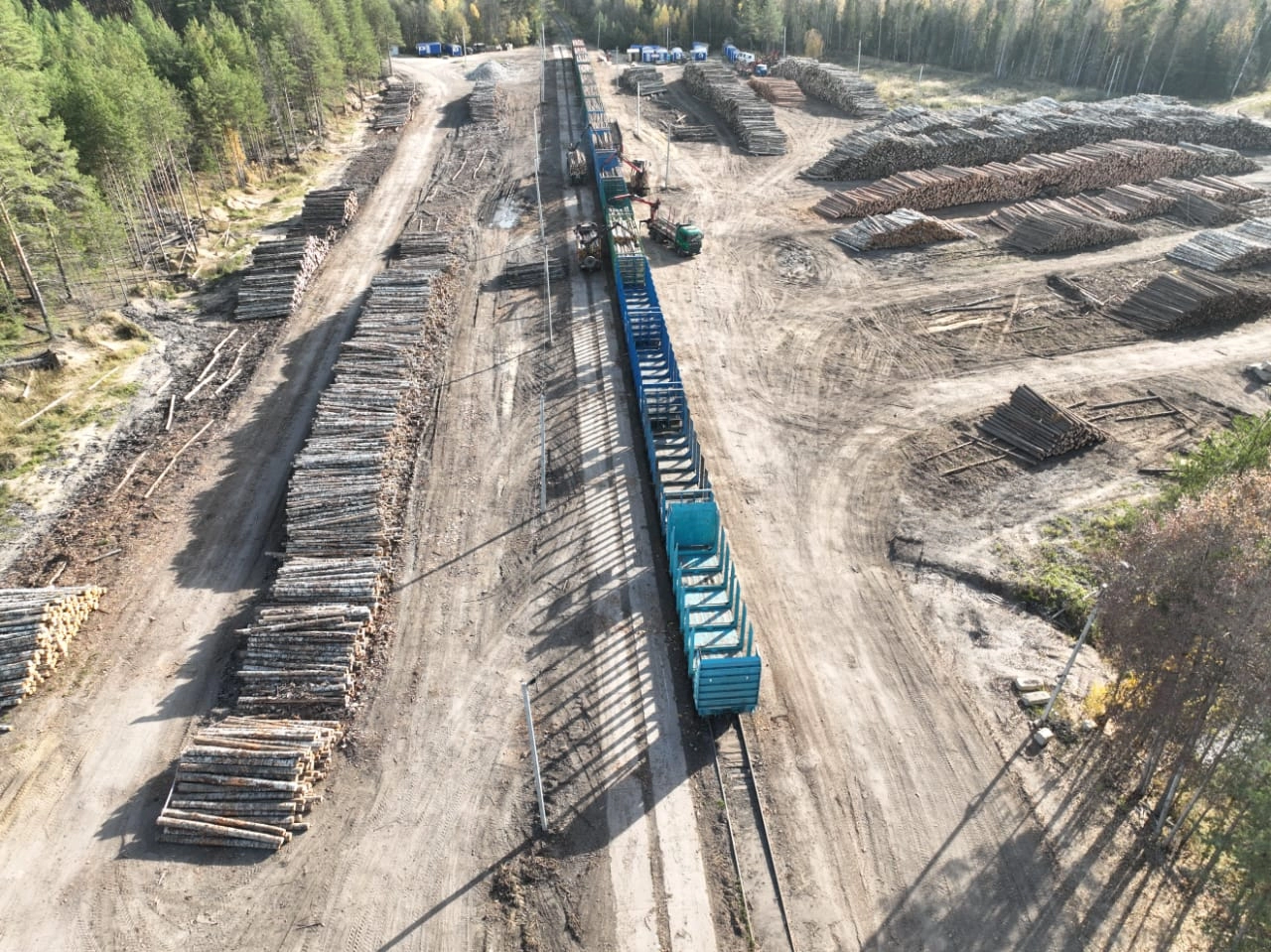
If the sanctions were a blow to the elite, the logistical crisis they provoked became a genuine national calamity. The railroad—Russia's national fetish, the legacy of imperial scale—buckled. The eastern arteries leading to China are stuck in a traffic jam of timber wagons. They have become the symbol of the new Russian economy: grand ambitions jammed into narrow, rusty bottlenecks of infrastructure.
The state, as usual, tries to put out the fire with subsidies. But, as noted with irony in the industry, obtaining them is an art comparable to completing a quest. Medium-sized businesses from Karelia, whose mills were built for export to Finland, cannot compete with the lobbyists of major holdings "mastering" new routes to Africa. Sanctions, intended to dismantle an oligarchic system, have in fact strengthened the positions of the largest players skilled at negotiating with the state.
The "North-South" Corridor: A Geopolitical Fantasy in Search of a Single Decent Terminal
Nothing so delights the heart of a Kremlin strategist as a map with fat transport arteries bypassing "unfriendly" countries. The International North–South Transport Corridor is the beloved child of this dream. A route from Russia through Iran to India sounds like a genius move capable of outmaneuvering the Suez Canal.
Reality, as usual, is more prosaic. As logistics experts frankly admit, the basics are missing: terminals, warehouses, synchronized schedules. Infrastructure lags behind political ambitions by light-years. This is the perfect metaphor for the entire "new" economic model: loud projects announced from the podium shatter against the mundane reality of missing spare parts for sawmills and the practice of "cannibalizing" harvesters—dismantling one machine to repair another. Sovereignty, it turns out, requires not only patriotic speeches but also ball bearings.
A Finale That Isn't: Lessons from the Timber Front
What have we learned in three years?
Globalization hasn't surrendered. It has changed its address. And that address is not a single one in Beijing. It's at least two: in Beijing and New Delhi. Russian birch now flows not into Finnish, but into Chinese and, with caveats, Indian particleboard. Supply chains didn't break—they painfully stretched between new poles of power.
State subsidies are always a double-edged sword. Without clear, measurable KPIs and a rigid system of accountability, they easily transform from an engine of progress into a tool for supporting the status quo, incapable of generating real added value.
The main winner is big capital, skilled at playing long games with power. The main loser is small business and company towns tied to the old, convenient, but politically incorrect route.
The Russian timber industrialist of 2025 is not a romantic conqueror of the taiga. This is a cynical logistician, a polyglot trader, and a master of sanctions circumvention. He is building a future where currency comes from the East, technology comes from the forced drive of import substitution, and political risk has become part of the cost per cubic meter.
The West wanted to isolate Russia. Instead, it merely forced it to load containers in a different port. And, as it turned out, buyers for its goods were found. Not the victory one might have dreamed of in the Kremlin, but not a defeat either. Simply a new, more costly and ungainly normal. In economics, as in politics, the most painful consequences are often precisely those no one intended.
The outcome is simple and brutal: 95% of all exports went to Asia. And out of every ten wagons sent there, seven are unloaded in China. India, for now, is merely a quiet but persistent auctioneer at this fire sale. These numbers prove it: the industry's old backbone is broken. But it has learned to crawl. And now it crawls not West, but South, being drawn into a new, yet unwritten chapter of its history.