
Russia's Forests Go Digital: FGIS LC in Action
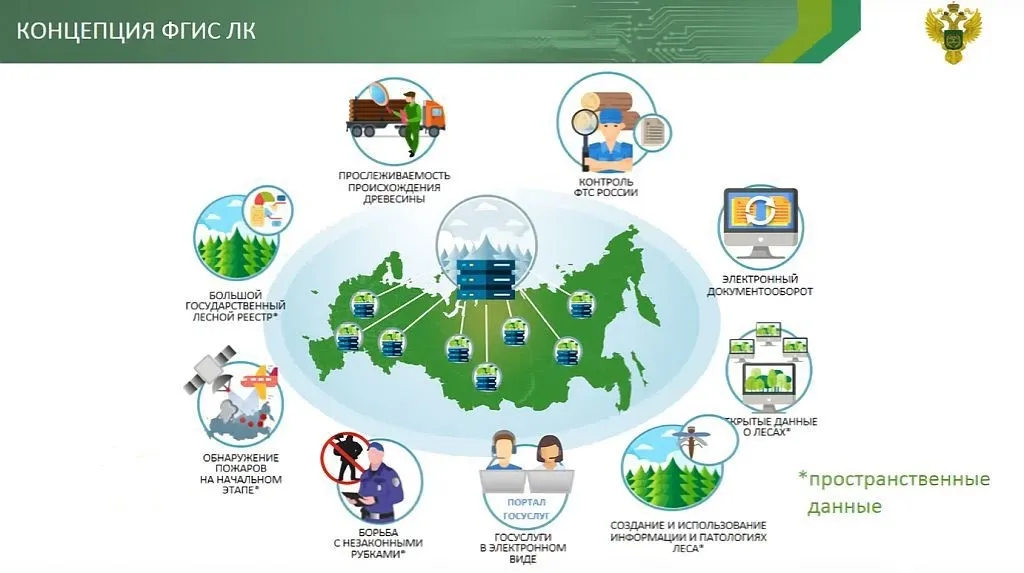
Digital Forest Management: What's Ahead in 2025?Imagine a forest where every boundary is clear, every plot documented, and every service accessible with just a few clicks. It sounds like a fantasy in a sector long dominated by paper maps and manual calculations. Yet, Rosleskhoz has stepped boldly into the digital era with the ambitious FGIS LC project, aiming to revolutionize forestry in Russia.
The system, often referred to as the "Digital Twin of the Forest," promises to become an indispensable tool for regions managing their natural resources. But what does this mean in practice, and why is the system’s launch more than just a bureaucratic milestone?
The migration of data, akin to scaling Everest, is nearly complete:- Forest District Boundaries. Data for 1,468 out of 1,469 districts have already been uploaded. The final region is like the last piece of a massive puzzle.
- Local Forest Areas. With 99.8% of data uploaded, 7,550 areas are now part of the system.
- Forest Quarters. 98.7% of the information has been processed, with the finish line in sight.
Every new upload into the system makes forest management more transparent and accessible. As Peter Mikka, Head of the Department for Information Systems Development at Rosleskhoz, points out, transitioning to a digital space is already opening new doors for regional authorities. Currently, 34 Russian regions are using FGIS LC to provide public forestry services.
What Else is Included?The numbers speak volumes:
- 168,100 Forest Declarations. These documents are now just a click away.
- 59,100 Forest Section Descriptions. These detailed records serve as identity cards for forest plots.
- 397,000 Forest Plots. The sheer scale is staggering.
And this is just the beginning: over 93,700 forest sections have already been created in the system, with more added every day.
What's Next?From January 1, 2025, FGIS LC will become the sole platform for maintaining the State Forest Registry across all Russian regions. This means no more outdated maps or incomplete data. Regional authorities must act quickly to ensure retrospective data is uploaded before the deadline.
Conclusion
The Digital Twin of the Forest is more than just a technological initiative—it’s a leap toward a future where managing natural resources becomes not only transparent but also highly efficient. For regions, the task now is to make the final push, ensuring that by the new year, the forest registry is fully operational.
FGIS LC isn’t just a system; it’s a tool redefining how we care for our forests. With this digital "soul" now embedded in Russia’s forestry sector, the possibilities are endless—and this is just the beginning.


